
THE NEXT MARKET
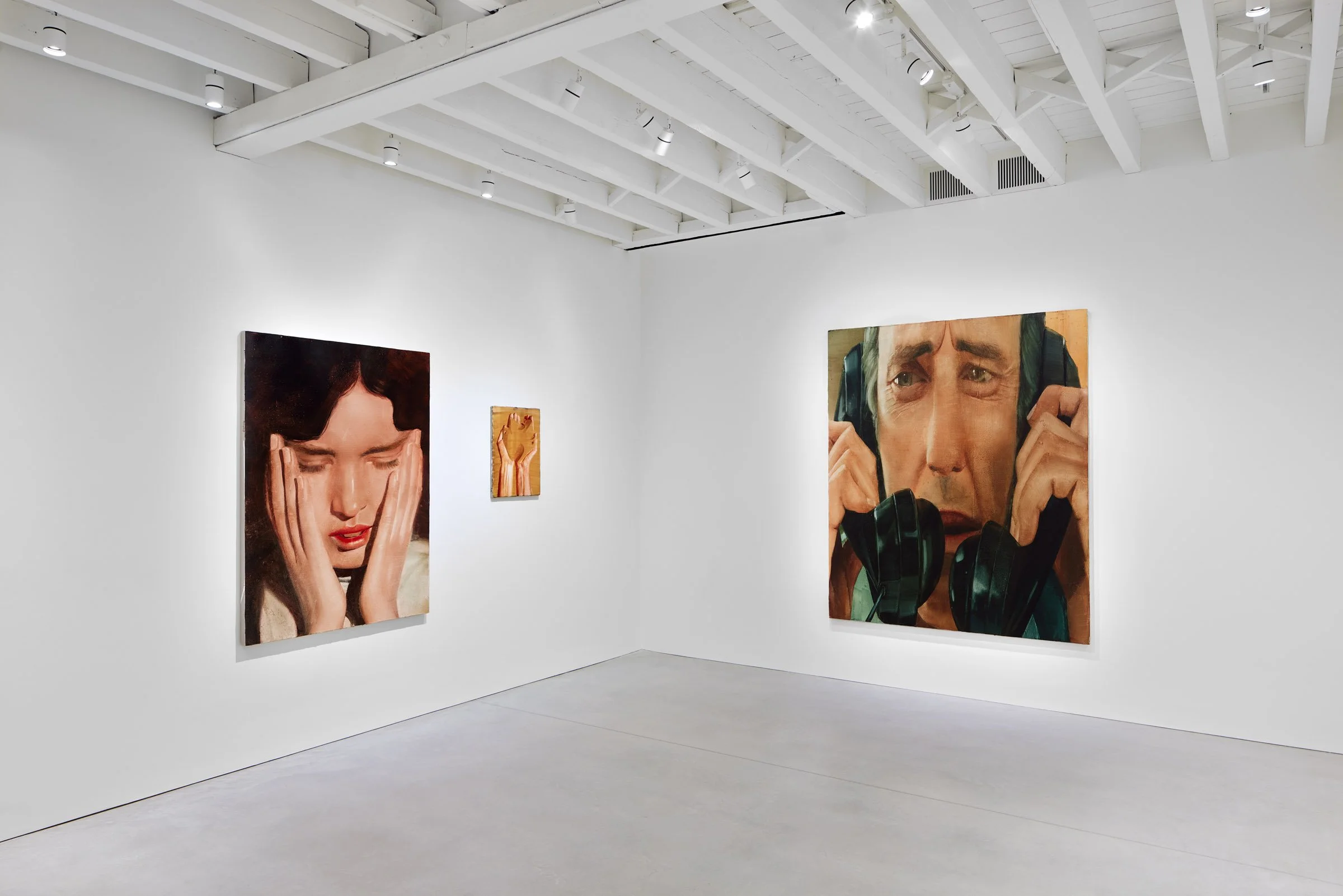

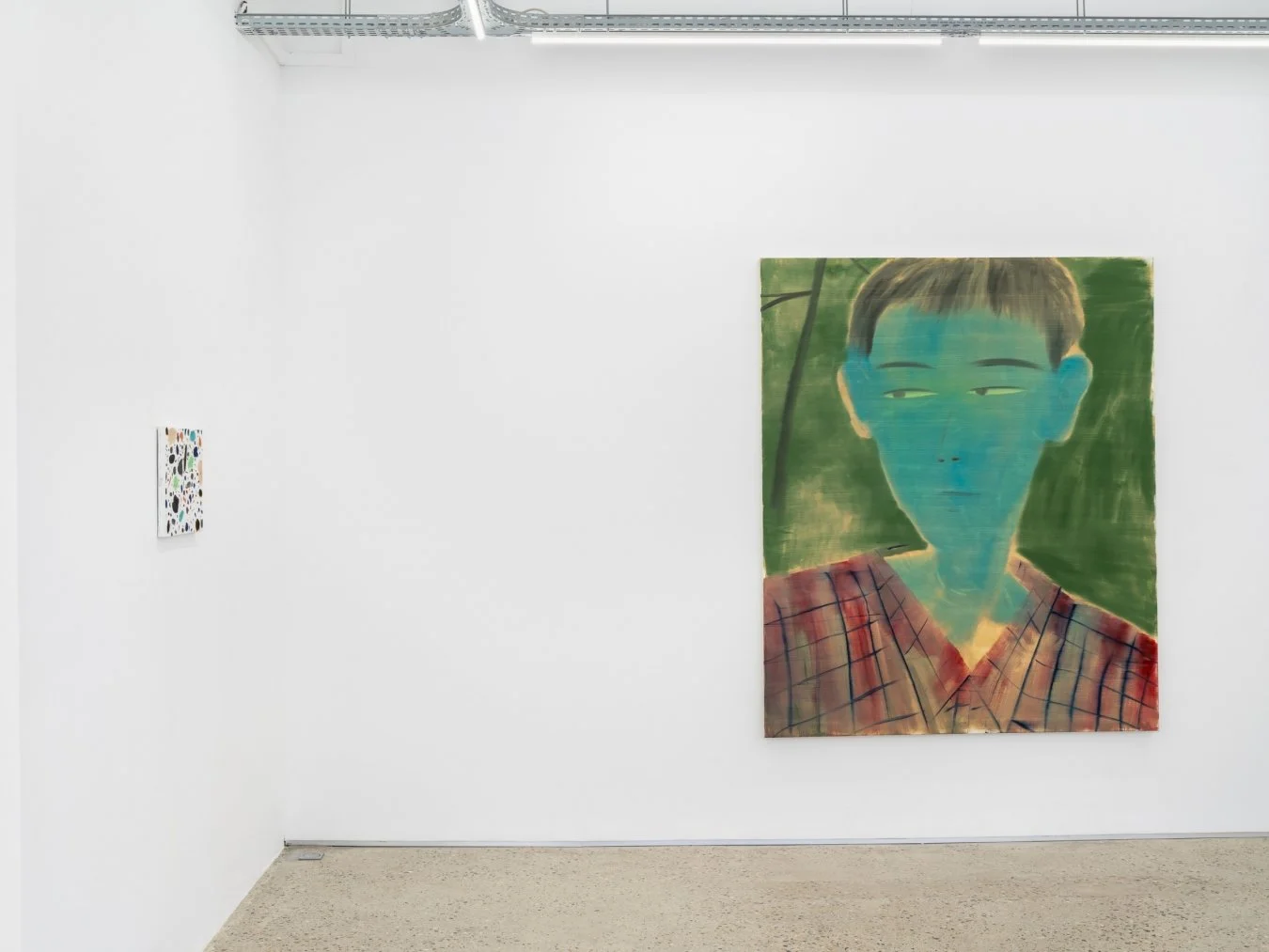

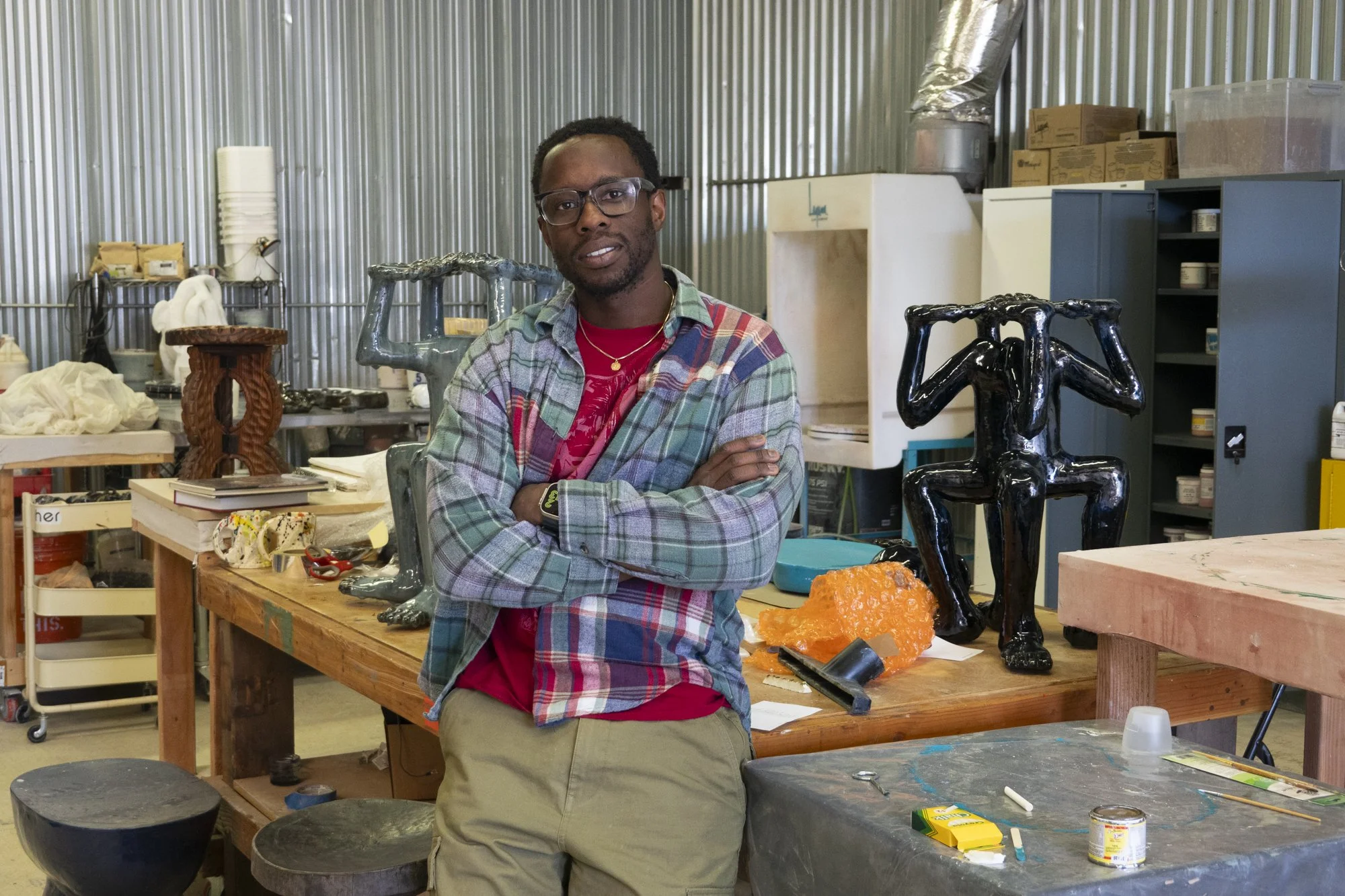
Five emerging artists whose markets are gaining momentum—and why collectors are beginning to pay attention.
01 / NJIDEKA AKUNYILI CROSBY
The Artist Between Worlds
There are artists whose prices rise because the market discovers them. And then there are artists whose markets rise because the world around them begins to understand what they were doing all along.
Njideka Akunyili Crosby belongs to the second category.
Born in Enugu, Nigeria, in 1983 and now based in Los Angeles, Crosby has developed a visual language that is immediately recognizable: intimate domestic interiors layered with family photographs, Nigerian popular culture, fragments of American life, textiles and architectural patterns. Her paintings are dense without feeling crowded, personal without becoming private.
That distinction matters to collectors.
Her work doesn't depend upon a passing aesthetic trend. It is rooted in a subject that has become increasingly central to contemporary culture: what it means to live between places, identities and histories.
The market has noticed.
In February 2026, David Zwirner sold one of Crosby's mixed-media works for $2.8 million at Frieze Los Angeles to a European foundation—the kind of seven-figure transaction that signals something more consequential than a successful art fair.
The institutional case is equally important.
The Metropolitan Museum of Art owns Crosby's Mother and Child, a 2016 work built around a photograph of her maternal grandmother holding her youngest aunt. The work intertwines family history, Nigerian identity, memory and loss; the museum notes that Crosby was expecting her first child while making it and had recently lost her mother.
The Whitney Museum of American Art likewise holds Portals, a monumental 2016 diptych measuring more than seventeen feet across. The work places Crosby herself inside an environment constructed from layers of photographic transfers, collage, fabric and drawing.
That combination—major galleries, museum collections, scarcity and increasingly serious prices—is precisely why she leads our list.
But the most compelling reason may be what happens when you look closely at the paintings.
Crosby's interiors are not simply beautiful rooms.
They are archives.
A photograph might recall a family member. A piece of fabric might evoke Nigeria. A magazine image might introduce American popular culture. A decorative pattern might carry another history entirely.
Everything belongs to somewhere.
And yet everything occupies the same room.
That is the idea at the center of Crosby's work: the domestic interior as a place where different worlds can coexist.
For a collector, that gives the work something difficult to manufacture after the fact.
It has a point of view.
It has a recognizable visual language.
And it has a cultural relevance that continues to expand rather than diminish.
There is, of course, no guarantee that a $2.8 million sale becomes a $4 million sale—or that today's demand will persist indefinitely. Art is not a conventional financial asset, and the value of individual works can vary enormously according to period, scale, provenance, condition and quality.
But those are precisely the reasons Crosby is interesting now.
The market is no longer asking whether her work belongs in serious collections.
It is beginning to ask how much the best examples will cost when they become harder to find.
For collectors willing to look before an artist becomes ubiquitous, that distinction can be significant.
Njideka Akunyili Crosby is our number one not because she is the cheapest artist on the list, but because the cultural and institutional case for her work is already remarkably strong—and the market appears to be catching up.
02 / YU NISHIMURA
The Quiet Rise
Some artists announce themselves.
Others are discovered.
Yu Nishimura belongs to the second group.
Born in Japan in 1982, Nishimura paints landscapes and figures that initially appear almost dreamlike in their simplicity. Look longer, however, and the compositions begin to reveal a more complicated visual language: layered perspectives, flattened spaces, dense vegetation and figures that seem to exist somewhere between memory and imagination.
That quietness may be part of the appeal.
The contemporary market is crowded with artists competing for attention. Nishimura's paintings do almost the opposite. They ask the viewer to slow down.
Collectors have begun doing exactly that.
In May 2026, Leaves carpet, a 2017 oil painting more than seven feet wide, sold at Sotheby's New York for $998,400, against an estimate of $120,000–$180,000. The result was more than eight times the low estimate and established a new auction record for the artist. It also represented a 40 percent increase over Nishimura's previous auction record, set only six months earlier.
The acceleration is notable.
His previous record, thicket (2020), sold for $711,200 at Sotheby's in November 2025. Before that, across the place(2023) reached $406,400 in May 2025. In other words, three consecutive auction benchmarks have moved sharply upward in a remarkably short period.
That is the kind of pattern collectors watch.
But auction performance alone isn't enough.
Nishimura has also been building the institutional and gallery infrastructure that can sustain a market beyond a single successful sale. He has exhibited in Paris with Crèvecœur and London with Sadie Coles HQ, and he is represented by David Zwirner. Artsy's assessment of the 2026 market specifically notes that interest in the Japan-based artist has intensified alongside this expanding gallery presence.
There is also something unusually coherent about the work itself.
Nishimura draws on the traditional Japanese fukinuki yatai technique—a "blown-off roof" perspective that allows the viewer to look into a scene from above—while incorporating Western linear perspective. The result is neither conventionally Japanese nor conventionally Western. His landscapes become constructed worlds in which nature, memory and human presence overlap.
That distinction matters to a collector.
A market can push prices upward temporarily. A recognizable artistic language is harder to manufacture.
Nishimura already has one.
His paintings are identifiable without requiring a signature in the corner: dense natural settings, unusual perspectives, subdued figures and a sensation of looking into a memory rather than simply observing a landscape.
And the market is beginning to recognize that language.
Perhaps the most revealing number isn't even the $998,400 record.
It is the estimate.
Sotheby's expected Leaves carpet to sell for $120,000–$180,000.
It sold for nearly $1 million.
That gap is significant because estimates are one of the ways the auction market communicates its expectations. When bidding dramatically exceeds those expectations, it can indicate that collectors perceive an artist's scarcity or importance differently from the market's published baseline.
There are risks, of course.
Nishimura's auction history remains relatively young compared with established blue-chip artists. A handful of exceptional results do not establish a long-term investment track record. Nor does an auction record tell us what every work by an artist is worth.
For that reason, Nishimura is not on this list because we believe his prices must continue rising.
He is here because something is already happening.
His primary-gallery presence is expanding.
His institutional visibility is growing.
His secondary market is developing.
And his auction record has nearly reached seven figures after rising dramatically in consecutive years.
That combination is difficult to ignore.
For collectors, the attraction may ultimately be less about predicting the next record than recognizing the moment before an artist becomes fully established.
Nishimura's market is no longer invisible.
But it isn't yet mature, either.
That makes him particularly interesting.
The question for 2027 isn't whether the market has discovered Yu Nishimura.
It has.
The question is whether we're still early enough to watch what happens next.
03 / FLORIAN KREWER
The Breakout
There is a moment in an artist's market when something changes.
The artist hasn't suddenly become better. The galleries haven't changed what the work looks like. The museums haven't necessarily rewritten their opinions.
But collectors begin to compete.
For Florian Krewer, that moment may have arrived.
In May 2026, Krewer's night hunters, a monumental 2022 oil painting, sold at Sotheby's New York for $256,000. The estimate had been $120,000–$180,000. More striking was what happened to the artist's record in the process: the sale was 375 percent higher than his previous auction record, established just fourteen months earlier.
His previous record was $52,500 for a 2015 Untitled at Phillips in March 2025.
Before that, another Untitled sold for $25,500 at Christie's in 2024.
In roughly two years:
$25,500 → $52,500 → $256,000
That is not a mature market.
It is a market discovering itself.
And that distinction is precisely what makes Krewer interesting.
Born in Berlin in 1986, Krewer paints bodies and landscapes that seem to exist somewhere between reality and hallucination. His figures move through forests, streets and undefined spaces, often rendered in acidic greens, electric blues, bruised purples and unexpected flashes of color.
The paintings can feel beautiful and slightly threatening at the same time.
That tension is part of their identity.
And recognizability matters enormously when collecting contemporary art.
An artist can be critically successful without developing a strong secondary market. Conversely, an artist whose work can be identified immediately across a room possesses something increasingly valuable: a visual signature.
Krewer has one.
But the auction market is only one part of the story.
In June 2026, the Musée d'Art Moderne de Paris presented Florian Krewer: woven thin, his first solo exhibition in France. The exhibition brought together sixteen monumental paintings, including previously unseen works, and followed the museum's acquisition of several works by the artist.
That institutional recognition matters.
A young artist's market can move quickly on speculation. Museum acquisition introduces a different kind of validation.
And Krewer's institutional footprint is already extending beyond Paris. His work has entered collections including the Metropolitan Museum of Art, LACMA, the Centre Pompidou and the Pinault Collection.
For a collector, this creates an intriguing convergence:
A recognizable body of work.
Major institutional interest.
Established gallery representation.
A rapidly developing auction market.
None of those factors guarantees appreciation.
In fact, the speed of Krewer's recent price movement is itself a reason for caution.
A 375-percent increase sounds spectacular—and it is—but it is occurring from a relatively small base. A $203,500 increase is very different from a 375-percent increase on a $10 million market. The artist's auction history is also still short.
This is where the distinction between momentum and maturity becomes important.
Krewer's market is not mature.
That's the opportunity—and the risk.
The collector who discovers an artist after twenty years of established auction records is buying certainty at a premium.
The collector who discovers an artist while the market is still forming is accepting considerably more uncertainty in exchange for the possibility of being early.
Krewer sits squarely in that second category.
There is another reason to pay attention.
His work belongs unmistakably to its moment without looking disposable.
The paintings have the visual immediacy contemporary collectors increasingly respond to, but they also reward prolonged looking. Bodies become landscapes. Landscapes become psychological spaces. Familiar forms become slightly unstable.
They don't explain themselves immediately.
That quality may prove important as his market develops.
Because ultimately, collecting isn't only about predicting what someone else will pay.
It is about living with the work.
And the strongest emerging artists tend to possess something that survives beyond the auction room: the ability to hold attention.
Florian Krewer appears to have that ability.
Whether his $256,000 record becomes the beginning of a much larger market or simply the high point of a particularly aggressive moment remains impossible to know.
But the signals are unusually clear.
The museum world is paying attention.
The galleries are paying attention.
And, increasingly, the auction market is paying attention.
For a collector looking beyond the established names, that's the moment worth watching.
Not after the market has decided what an artist is worth.
Before it has finished deciding.
04 / JOSEPH YAEGER
The Early Signal
The most interesting moment in an artist's market may not be when a work sells for millions.
It may be when the market begins to establish a price at all.
Joseph Yaeger is at that stage.
Born in 1986, Yaeger has emerged quickly from the world of young contemporary painting into the increasingly serious attention of international auction houses and collectors. His work is strange, cinematic and difficult to summarize: figures appear in ambiguous interiors, faces become distorted, scenes feel simultaneously familiar and unsettling.
There is a sense that something has happened just before the moment we are seeing—or is about to happen immediately afterward.
That uncertainty is part of the attraction.
And increasingly, it is showing up in the numbers.
In April 2026, Yaeger's The Euphemism sold at Sotheby's New York for $320,000, establishing a new auction record for the artist. The result exceeded his previous record by $54,300.
Then came another significant result.
In May 2026, There is a light and it always goes out sold at Phillips New York for approximately $477,300, establishing a record for Yaeger's work on paper.
Those numbers are still modest compared with the established blue-chip market.
That is precisely why they matter.
Yaeger is not an artist whose market has already been fully priced. There isn't decades of auction history telling collectors exactly what a particular period, size or subject should cost.
The market is still figuring that out.
That process—price discovery—is one of the most interesting stages in collecting contemporary art.
Yaeger's rise has also happened unusually quickly.
His breakthrough auction result came in 2024, when Sphinx without a Secret sold at Phillips London for £203,200, more than eight times its low estimate. The following year, his work continued appearing prominently in major evening sales, and by 2026 he was setting new records at both Sotheby's and Phillips.
That progression suggests something beyond a single successful auction.
The market is beginning to develop a reference point.
But Yaeger's story isn't only about price.
His paintings have an unusual psychological quality that makes them immediately distinguishable. His figures often appear caught inside narratives that the viewer has entered halfway through. The compositions borrow something from cinema: cropped bodies, strange perspectives, moments of apparent tension and scenes that seem to imply a larger story just outside the frame.
That matters because collectibility requires more than scarcity.
An artist can be rare and still be forgettable.
Yaeger is increasingly difficult to mistake for someone else.
His gallery infrastructure is developing as well. In late 2025, Modern Art presented Polygrapher, Yaeger's first solo exhibition with the gallery following its announcement of his representation. The exhibition introduced new paintings and works on paper and marked the opening of the gallery's Bennet Street space.
That combination is worth watching:
A recognizable visual language.
Major auction-house exposure.
Rapidly rising auction records.
International gallery representation.
A relatively young market.
None of it guarantees future appreciation.
In fact, Yaeger's position comes with considerable uncertainty. His auction history remains short, and a small number of exceptional results can make percentage increases look dramatic. The difference between an artist whose market is genuinely deepening and one experiencing a temporary burst of speculation can only be understood over time.
That is why we aren't calling him an investment.
We're calling him a signal.
The collector interested in Yaeger today isn't buying the established certainty of a Picasso or a Rothko.
They're buying into a question:
What happens when an artist whose market is still forming begins attracting increasingly serious competition?
The answer won't be visible in one auction.
It will be visible in the next five years.
More museum acquisitions.
More major exhibitions.
More consistent auction results.
More competition for the strongest works.
Those are the signals that would transform today's speculation into tomorrow's established market.
For now, Yaeger remains early.
And early is precisely what makes him interesting.
The market has noticed Joseph Yaeger.
It just hasn't finished deciding what he's worth.
05 / WOODY DE OTHELLO
The Object
Paintings dominate the contemporary art market.
That makes sculpture particularly interesting.
For collectors looking beyond another canvas, Woody De Othello offers something different: objects that occupy space, cast shadows and interact with the rooms around them. His ceramics and bronzes transform familiar household forms—chairs, tables, telephones, sinks, lamps and vessels—into anthropomorphic characters that seem to possess moods of their own.
A chair can look lonely.
A telephone can appear anxious.
A lamp can seem almost alive.
It is playful at first glance.
Then it becomes something more.
De Othello was born in Miami in 1991 and grew up in the Bay Area. His work draws heavily from domestic life and the objects that surround us, while also engaging with themes of race, identity, family and the psychological experience of everyday spaces.
The result is a visual language that is remarkably easy to recognize.
And the market is beginning to respond.
In May 2026, De Othello's Self-Portrait sold at Sotheby's New York for $381,000, establishing a new auction record for the artist. The result exceeded his previous record of $277,200, set in 2025. (heni.com)
The increase is meaningful, but the more interesting story is what the work represents.
De Othello belongs to a generation of artists who have blurred the boundaries between fine art, design and the objects of everyday life.
That makes his work particularly relevant to collectors whose homes are becoming increasingly important parts of their collections.
A painting occupies a wall.
A De Othello sculpture can occupy a room.
That distinction changes the relationship between art and architecture.
His objects can function almost like eccentric pieces of furniture: they participate in the environment while simultaneously disrupting it. A familiar household object becomes strange, oversized or expressive. The room changes because the object is there.
For a collector, that creates another dimension of value.
Presence.
The strongest sculpture doesn't simply decorate a room.
It changes the room.
De Othello's work also benefits from a broader institutional trajectory. His sculptures and ceramics have entered major museum collections, including the San Francisco Museum of Modern Art, the Los Angeles County Museum of Art and the Whitney Museum of American Art. His work has also been exhibited internationally, establishing an institutional context beyond the auction market. (sfmoma.org)
That combination is important.
A young artist with rising auction prices is interesting.
A young artist with rising auction prices and institutional validation is more compelling.
Still, De Othello's market remains young.
His $381,000 record is nowhere near the established market of major postwar sculptors. There is limited historical auction data, and individual works can vary considerably according to material, scale, edition and date.
Again, the question isn't whether his price will rise.
No one can know that.
The more useful question is whether the characteristics that have made his work desirable are likely to remain relevant.
His answer is unusually tangible.
People will always live with objects.
They will always build rooms around them.
And they will always attach emotional meaning to the things they encounter every day.
De Othello simply makes those objects impossible to ignore.
That may be why his work feels particularly well suited to the next generation of collecting.
The contemporary collector increasingly moves between categories: art, architecture, furniture, design and objects. The boundaries between them are becoming less important.
De Othello operates comfortably inside that space.
His work is collectible as sculpture.
But it can also be experienced as design, character, furniture and visual storytelling.
That versatility may prove valuable.
The market has already begun assigning a higher price to the strongest examples.
The institutions are already paying attention.
And the work itself has something that cannot be easily reproduced:
a personality.
For collectors willing to look beyond the wall, Woody De Othello represents a different kind of opportunity.
Not simply another artist to acquire.
An object capable of changing the room around it.